Hudson River School
1825 – 1880
Catskill sunrises, Andean summits and still, glowing harbors - America's first landscape school
About Hudson River School
The Hudson River School is the name later given to the loose fellowship of American painters who, from the mid-1820s through the 1870s, made the country's own scenery the central subject of serious art. In their lifetimes they were more often called the "native," "American," or "New York" school. Their pictures of the Hudson Valley and of the Catskill, Adirondack, and White Mountains combined close, detailed observation of rock, tree,…
Read full biography →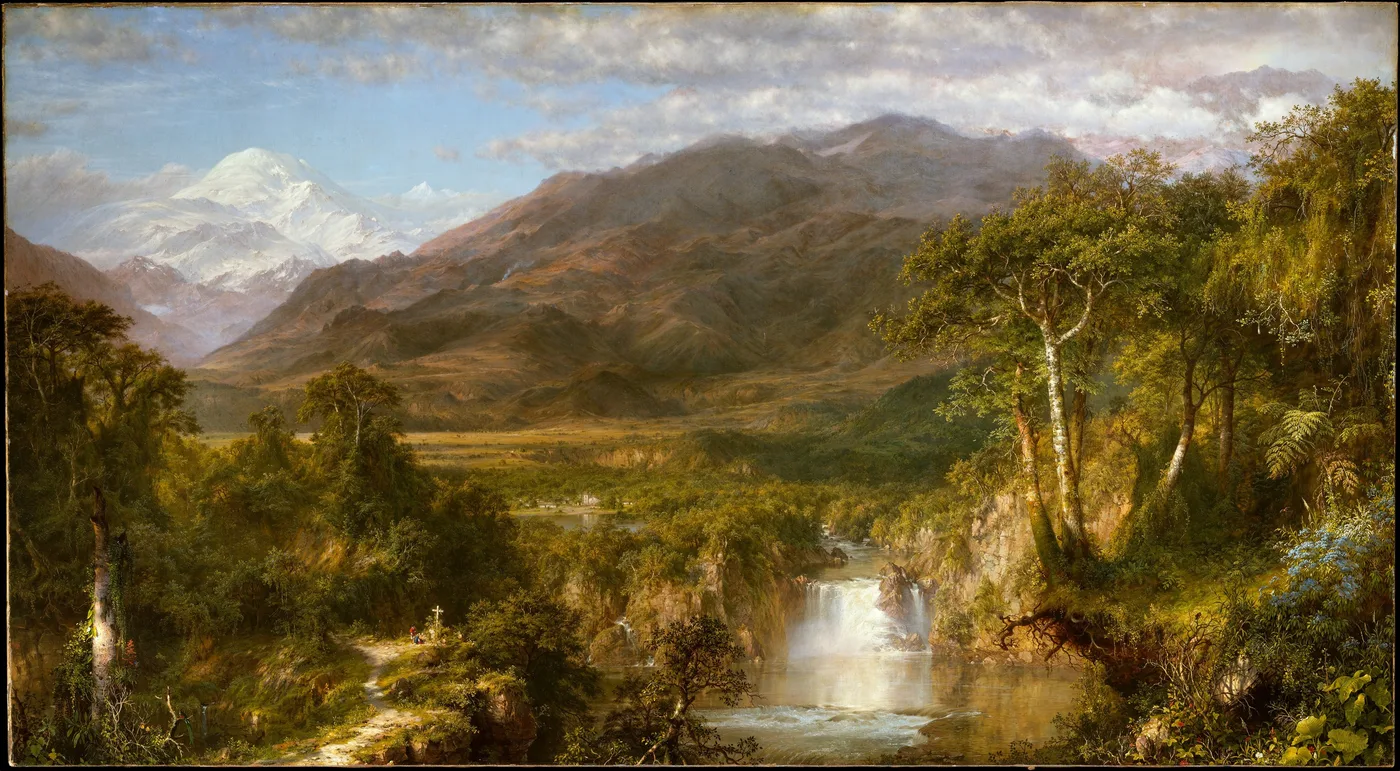
Notable Works
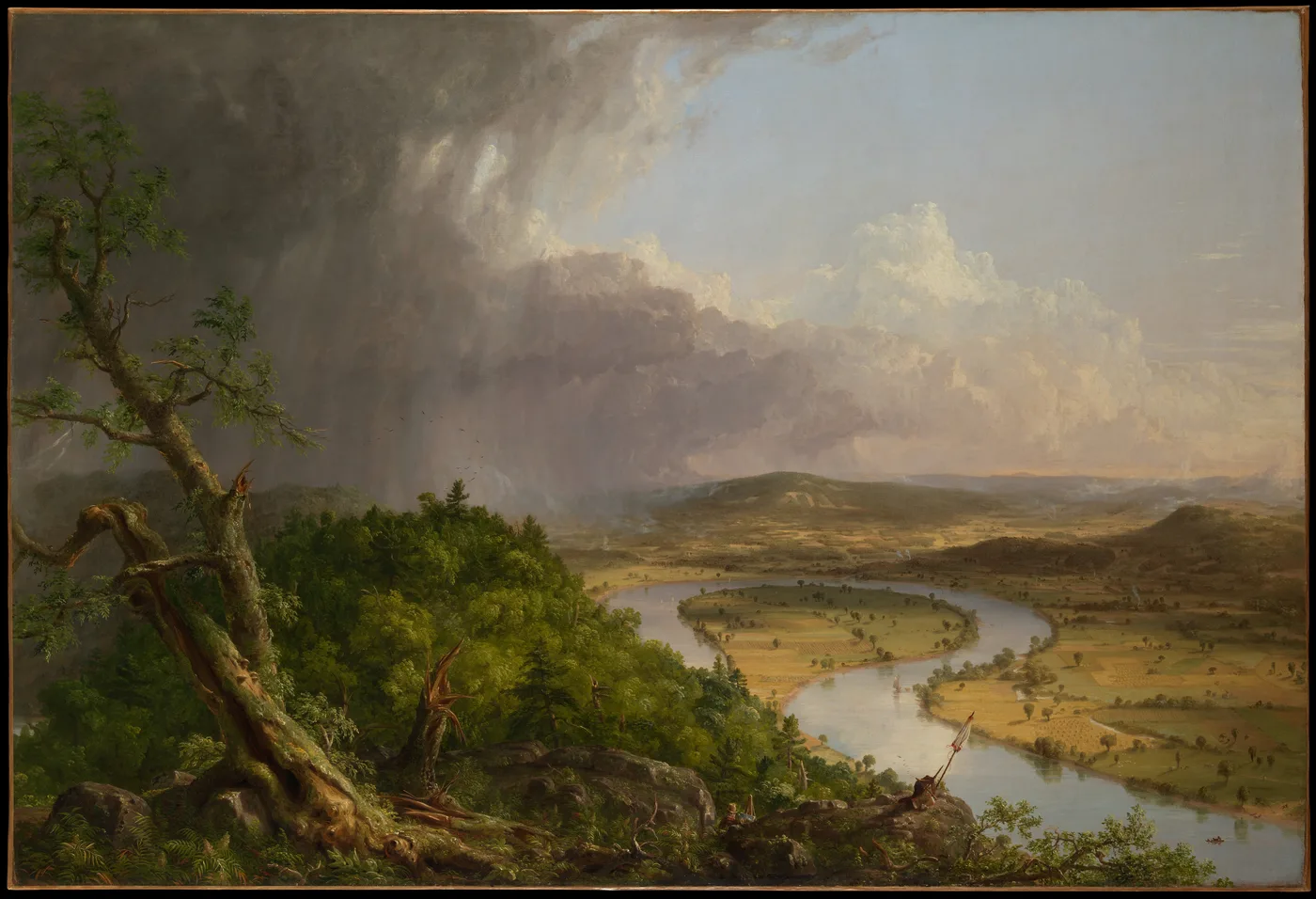
View from Mount Holyoke, Northampton, Massachusetts, after a Thunderstorm - The Oxbow
Thomas Cole painted The Oxbow at the suggestion of his patron Luman Reed for the National Academy of Design exhibition of 1836. A retreating storm and broken trees on the left give way to the…
Browse the collection →Heart of the Andes
Frederic Edwin Church's panoramic South American landscape, combining a waterfall, river, tropical forest and distant mountains. Shown on its own at New York's Tenth Street Studio Building from…
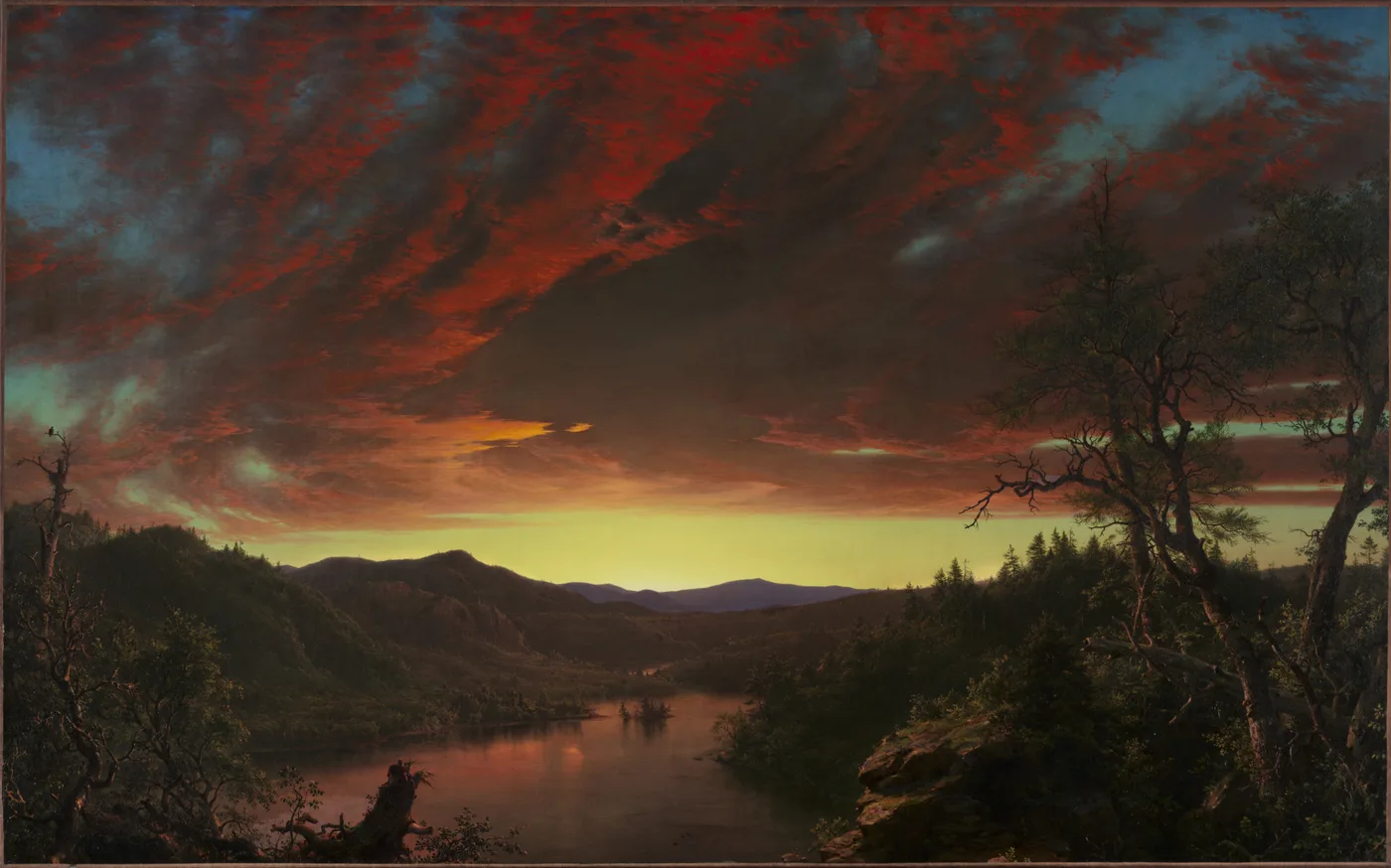
Browse the collection →Twilight in the Wilderness
Church painted this blazing sunset over the wilderness near Mount Katahdin, Maine, in his New York studio from sketches made nearly two years earlier. Painted on the eve of the Civil War, it has…
Browse the collection →Timeline
Thomas Cole emigrates from England to the United States
Asher B. Durand, then an engraver, publishes his engraving of the Declaration of Independence
In the autumn Cole travels up the Hudson by steamboat, stopping at West Point and Catskill Landing, and sketches in the eastern Catskills; John Trumbull, William Dunlap and Durand buy his first Hudson landscapes
Cole publishes his Essay on American Scenery in the American Monthly Magazine and exhibits The Oxbow at the National Academy of Design
Cole completes the first set of The Voyage of Life
"We are still in Eden; the wall that shuts us out of the garden is our own ignorance and folly."
— Hudson River School